


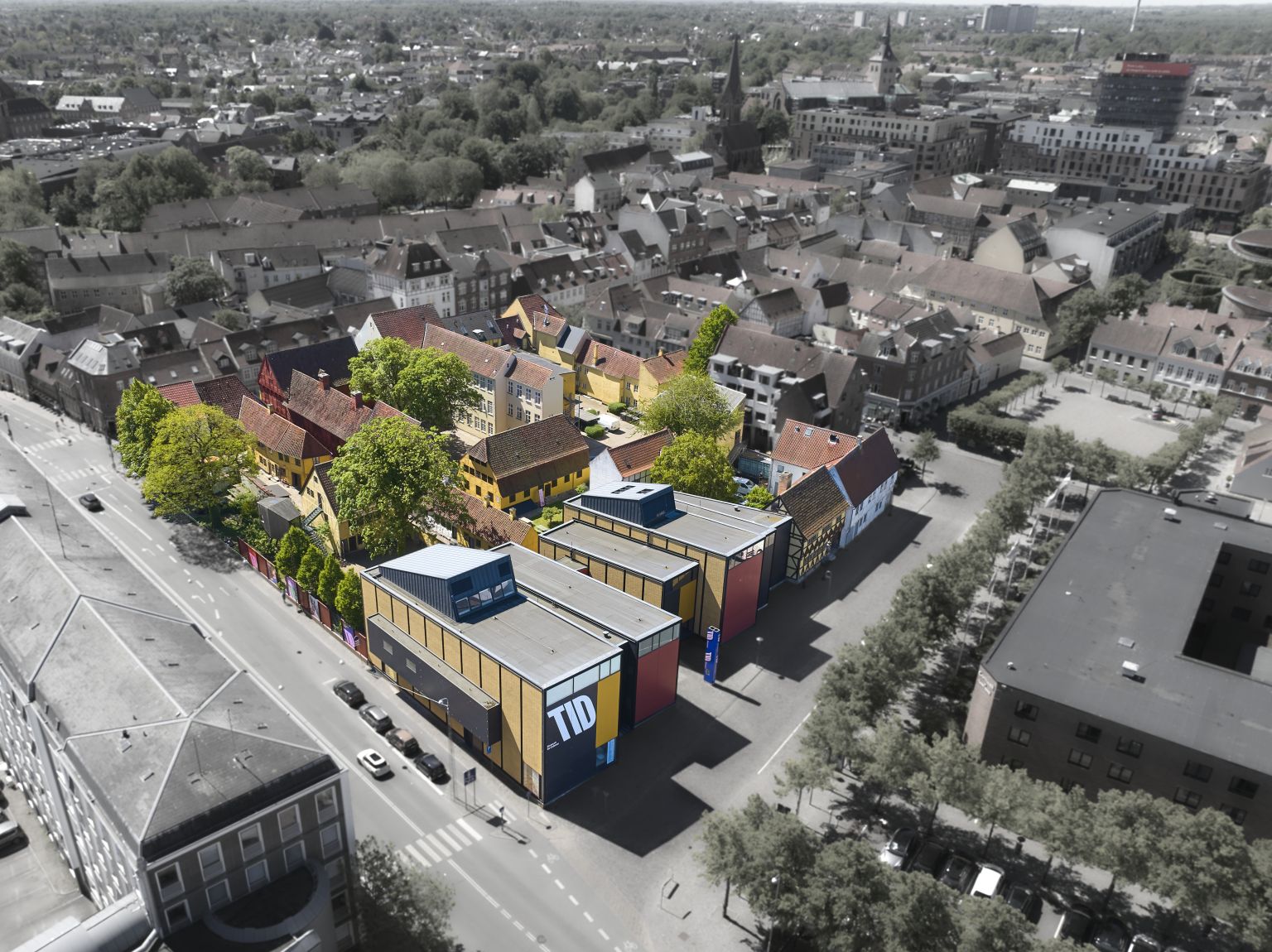
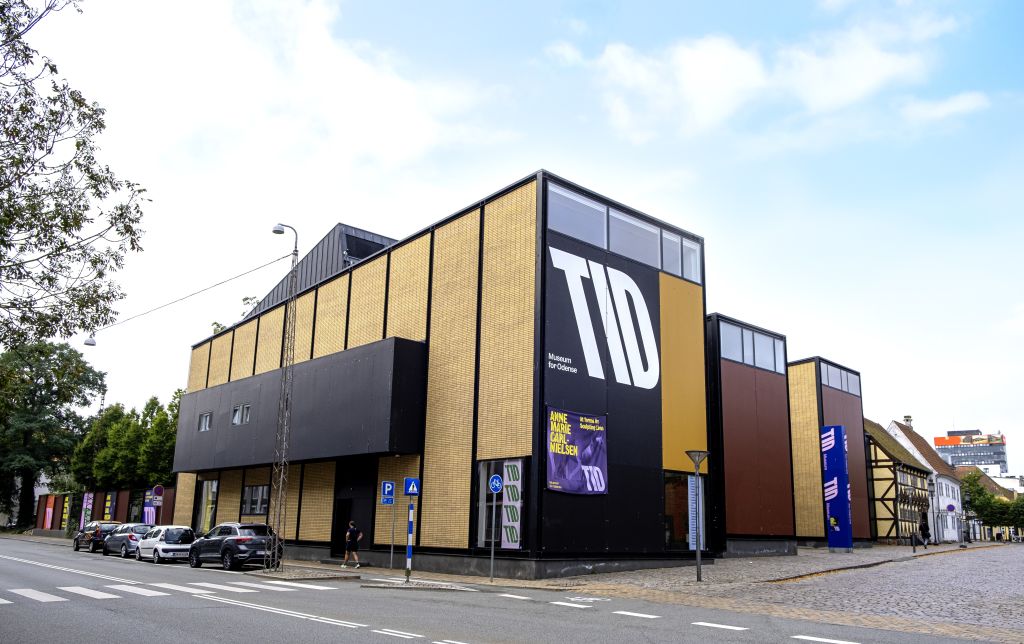
Møntestræde 1
In the building, you’ll find the ticket office, the shop, and the following exhibitions: Anne Marie Carl-Nielsen: Sculpting Lives, Funen – In the Heart of the World, and Nonnebakken.
The large, modern building was constructed in 2013. It was designed by architects Frank Maali and Gemma Lalanda, who drew inspiration from the colors and materials of the historic houses throughout TID. The building is therefore conceived as a modern half-timbered house, combining past and present with its visible steel framework and large panels.
The building is designed as two clusters that align with the block’s plot structure. The two clusters are connected by a walkway over Møntestræde. During the construction, the northern part of Møntestræde was restored, so that Møntestræde once again connects Overgade and Sortebrødrestræde—just as it did in the Middle Ages.
In the main building, you can, among other things, see the exhibition Anne Marie Carl Nielsen: Sculpting Lives.
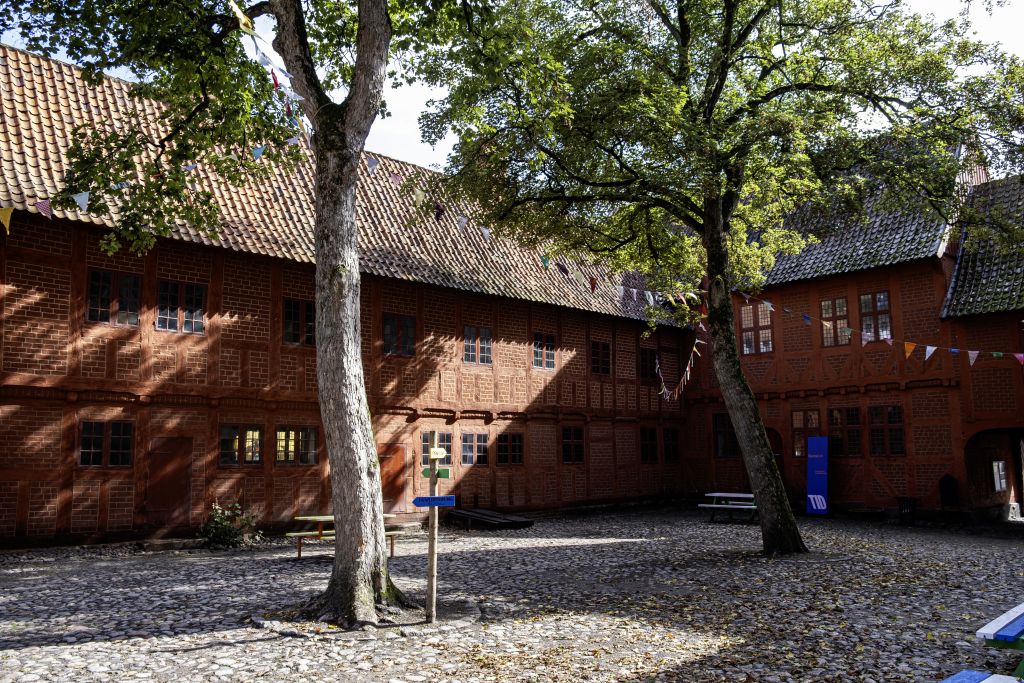
Møntergården
Møntergården is located in Møntestræde, where a coin workshop was situated around 1420 in an earlier building on the site.
The present building was constructed in 1646 by the nobleman Falk Gøye of Hvidkilde on southern Funen and served as his winter residence. For this reason, the building is also known as Falk Gøye’s House. It was built as a classic Renaissance half-timbered house. The walls are painted to resemble brick, as Falk Gøye intended the rough masonry to appear finer and more regular than it was. Also note the beautiful wood carvings, which nevertheless face only the street.
In the mid-18th century, the house was converted into a merchant’s residence with a shop and storage rooms. Later, around 1860, two shops were installed in the front building along with apartments for several families. As a result, the building lost its former distinguished character. In 1930, the Municipality of Odense purchased the building and restored it to its former glory. The building is listed.
You can see the exhibition Life in the City at Møntergården.
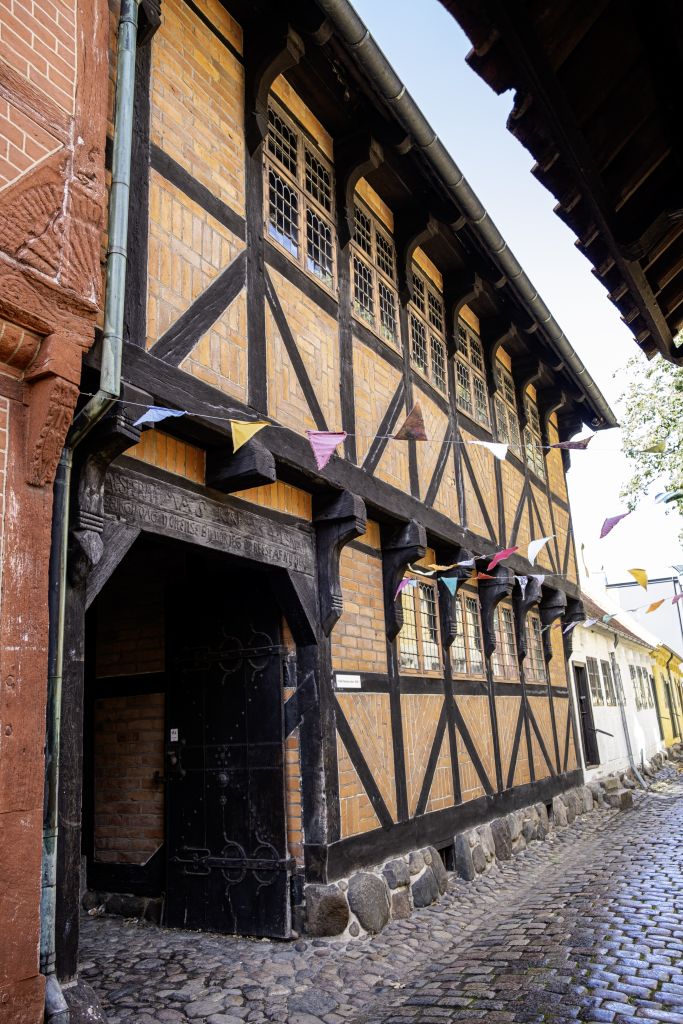
Ejler Rønnow's House
In 1547, the nobleman Ejler Rønnow had this property built at Nørregade 62 in Odense.
Over the years, the property has been owned by merchants, shoemakers, innkeepers, and tanners. From 1829 to 1899, a brandy distillery operated on the site, and the building was subsequently scheduled for demolition. Fortunately, the property was purchased by the Municipality of Odense in 1900, and in 1910 the Fyens Folk Museum opened the premises.
In 1939, the building was relocated to Møntestræde, where it stands today. The property was built during the transition between the Middle Ages and the Renaissance and therefore displays stylistic features from both periods. The building is listed.
Note: The building is open during events and on special occasions.
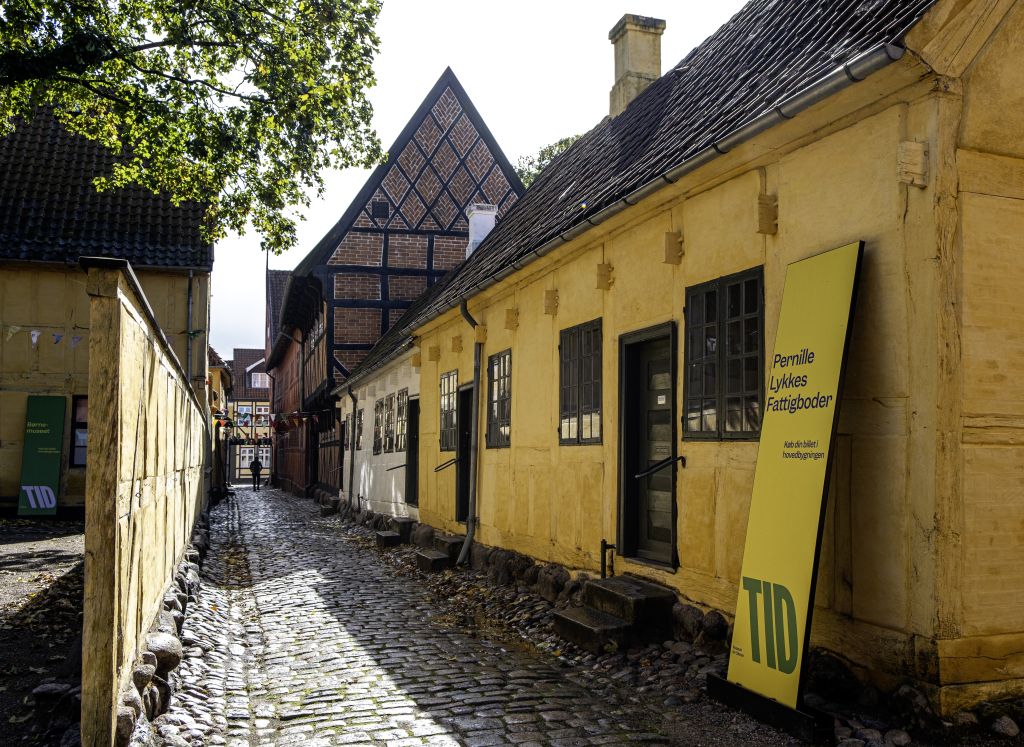
Pernille Lykke's Almshouses
Pernille Lykke's Almshouses were built in 1617 by noblewoman Pernille Lykke as housing for the poor.
According to the original regulation, “three honest, needy women, and two boys, fatherless and motherless, who shall attend the Latin School” were to live here for as long as the world lasts. The almshouses were administered by the parish priest of Vor Frue Church. The buildings were home to poor widows until 1955, when the almshouses became part of the museum. The foundation itself continued until 2014 at another location in Plumsgade in central Odense.
The buildings are listed.
Today, Pernille Lykke’s Almshouses feature exhibitions on the almshouses and poverty and can be visited along with the museum’s other exhibitions.
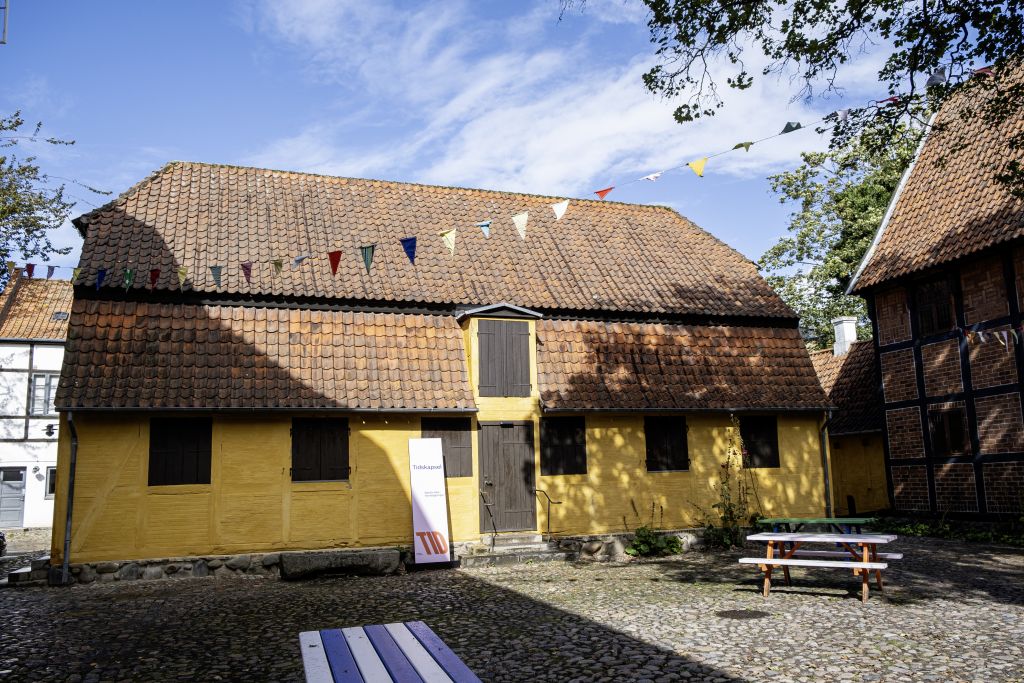
Nyborgladen
Nyborgladen was constructed in in the mid-1600’s as a rear building for a merchant’s property in Nyborg.
In the 1760s, the merchant’s house belonged to Caspar von Wessel, who was the brother of Tordenskjold. During this period, the house served as a residence for commanders, while Nyborgladen was used as a warehouse and stable. Throughout the 19th century, the property was owned by various merchant families. As a curiosity, it can be mentioned that the famous Odense novelist Morten Korch spent time in Nyborgladen working as a merchant apprentice in Nyborg in the 1890s.
In the 1950s, Nyborgladen was moved to its current location. The interior of the building has been extensively remodeled for exhibition purposes.
Nyborgladen hosts various temporary exhibitions, and the building – with its unique atmosphere – is a popular venue for events. The building is closed when not in use for exhibitions.
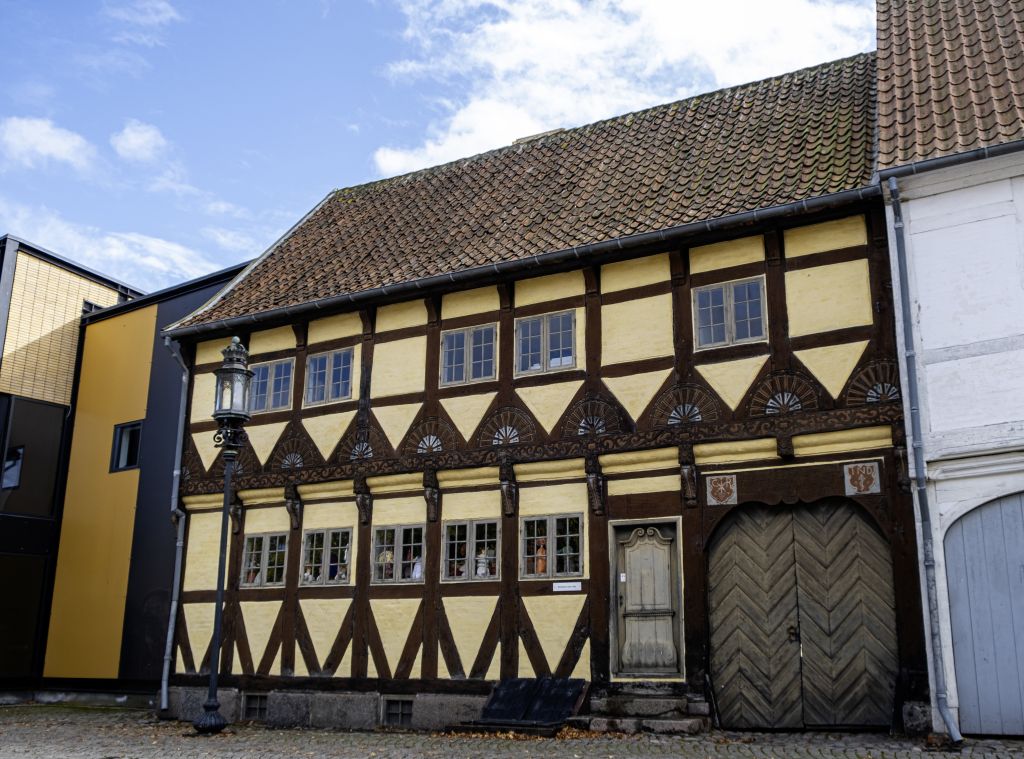
Østerbye's House
On Sortebrødre Stræde stands the front building of Østerbye's House. The building dates from 1631 and was originally located at Vestergade 76.
It was demolished in 1903 and reconstructed in the museum complex in 1945. The building was originally constructed for the parish priest Christen Rasmussen in Nr. Lyndelse. His widow, Johanne Nielsdatter, lived in the house until her death in 1660. The house has had several owners, but it is the owner from 1857, the dyer Østerbye, who gave the house its name.
In Østerbye’s House, dollmaker Patricia Homolová has her workshop.
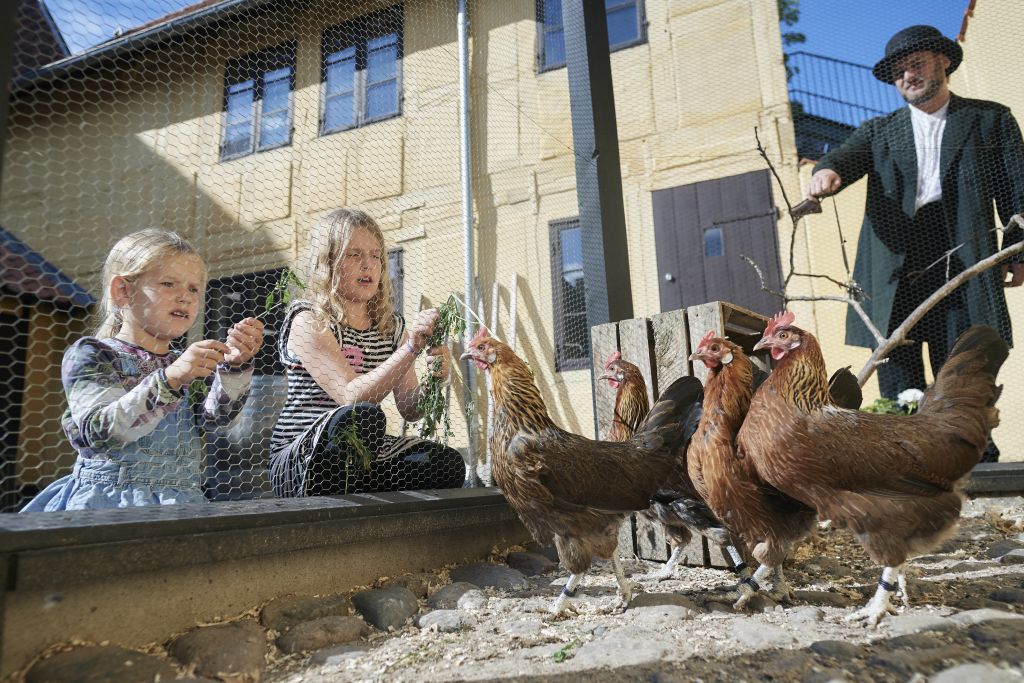
The Children's Backyard
The Children's Backyard of a series of buildings, including the carpenter's workshop and apartment. Everything is set up for playing and exploring.
The Children’s Backyard is part of an original building from 1799, designed to resemble an urban backyard around the 1800s. Everything is built using materials that would have been available at the time, and the backyard, carpenter’s workshop, and apartment are all set up within a building from 1799.
The front building was constructed for residential use in the late 1790s by the farm owner Knud Poulsen. The side building, which runs along Møntestræde, was built between 1811 and 1817 as additional living space for Peter Christoffer Lausen, who was the postmaster and at the time also owned the front building. The cross building, a two-story structure placed across the property, also dates from the late 18th century and was originally used as a stable – possibly for both residents and inn guests. Towards the end of the century, the building was raised and converted into residential space.
Today, the front building facing Overgade houses a shop and offices, while the side building and cross building are home to the Children’s Backyard, the Carpenter’s Workshop, and the apartment. Here, visitors can interact with all the exhibits and play freely with everything.